

Instituto Politécnico Nacional
ESIQIE, Laboratorio Electroquímica, UPALM
Av. IPN S/N, 07738, Mexico City, Mexico
ESIQIE, Laboratorio Electroquímica, UPALM
Av. IPN S/N, 07738, Mexico City, Mexico
“From water to hydrogen and from hydrogen to energy, transforming the past by developing sustainable systems.”
Today, humanity faces a range of pressing challenges, including global and regional competition, climate change, the energy transition, public health concerns, and the rise in fossil fuel consumption. Amidst a new wave of technological revolution and industrial transformation, the energy sector is undergoing a significant period of change. This transformation involves the restructuring of traditional industries, a shift toward green and low-carbon development, new approaches to innovation, and the emergence of fresh drivers of growth. As a critical pillar of technological advancement, the energy industry must urgently seek new development pathways, nurture a new generation of innovation-driven talent, unlock “new quality productive forces,” and foster emerging growth areas in energy innovation—responding proactively to the global demand for sustainable solutions. Hydrogen energy is one of the most promising options for partially or wholly decarbonizing various sectors, such as industry, mobility, and electricity, demonstrating that it can gradually replace fossil fuels.
This work will focus on the key technologies of hydrogen production and use, primarily including PEM, AEM, and alkaline electrolysis hydrogen production. Hydrogen residential applications and dual combustion with fossil fuels will be described. A methodology has been developed for sizing and designing alkaline electrolysers, and work is underway to standardize electrolyser performance through voltage-current curves and energy efficiency calculations. PEM and AEM test electrolysers are being designed to standardize national targets with various commercial MEAs prepared in IPN laboratories. An experimental microgrid for residential applications, called "Sustainable Solar-Hydrogen Housing," was developed, encompassing the entire hydrogen production chain, storage, and utilization in the generation of electricity for lighting and refrigeration. A format for technology transfer through licensing is being adapted, and the cost of technological development is being established. The IPN group has completed TLRs 4-6 for technological development, enabling it to become part of the CONACYT National Laboratory for Hydrogen Technologies (LANH2).
Keywords: Hydrogen, Electrolysis, Energy.
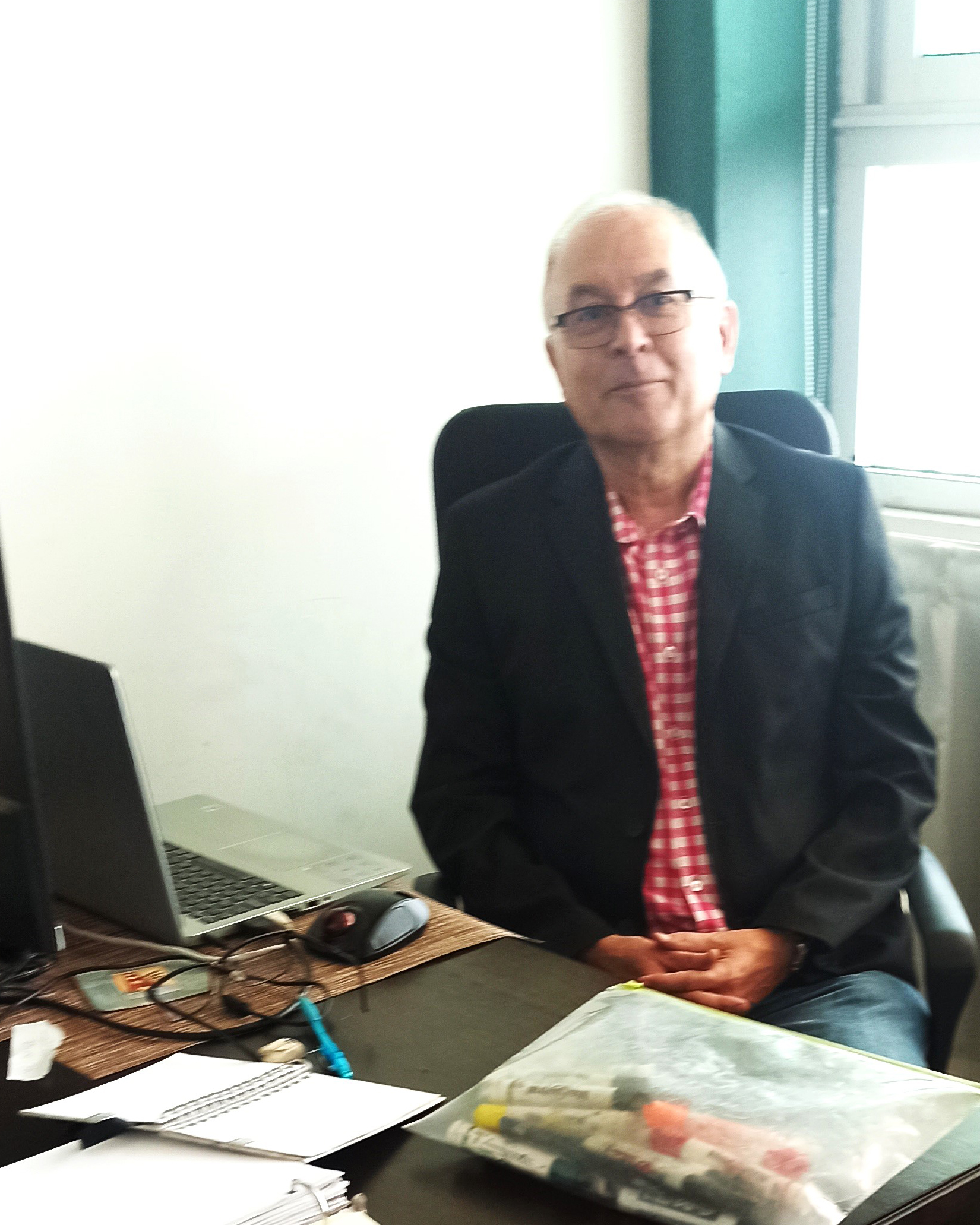
Tecnológico Nacional de México en Celaya
“The Role of Hydrogen in a Future Energy System Free of Pollution and Climate Change”
Recent improvements in electric battery costs and energy storage capacity have raised doubts about hydrogen's role in future energy systems free of climate change and polluting emissions. Many experts and public figures have expressed skepticism, citing the inefficiency and high costs of hydrogen production, distribution, utilization, and storage processes. This presentation examines hydrogen's strengths and weaknesses compared to electric batteries and other alternatives, addresses criticisms frequently raised by hydrogen skeptics, and concludes with an analysis of potential hydrogen uses, classifying them as possible, likely, or inevitable based on hydrogen's cost-benefit ratio versus alternatives.
Keywords:Hydrogen Energy Viability, Decarbonization Pathways..
"Salvador Aceves holds a Mechanical Engineering degree from Universidad de Guanajuato and a Ph.D. in Engineering from Oregon State University (USA). He completed postdoctoral research at Daido University (Nagoya, Japan) and a sabbatical at UC Berkeley. With 28 years at Lawrence Livermore National Laboratory (California, USA), he served as Renewable Energy Program Leader, specializing in low-emission transportation technologies—including electric/hybrid vehicles, hydrogen storage/distribution, and internal combustion engines. Dr. Aceves brings 32 years of hydrogen technology expertise, with emphasis on liquid and cryogenic hydrogen. He is an ASME Fellow, Oregon State Distinguished Alumnus, and National Researcher Level 3 (Mexico). Since 2020, he has been a professor at Tecnológico Nacional de México, Celaya Campus."

President and CEO at Tenova HYL
“Uses of Hydrogen in the steel industry: innovation and sustainability through direct reduction.”
Stefano began his career at the Techint Group in 1996, when he joined the Junior Professionals program at Tenaris Tamsa in Veracruz, Mexico. In 1998, he moved to Italy as Project Manager at Techint SpA (now Tenova), working across several worldwide steelmaking projects. In 2005, Stefano returned to Mexico as Project Director and COO at Tenova HYL in Monterrey, where he oversaw direct reduction plant projects. Since July 2015, he has been President and CEO of Tenova HYL.
It has been reported that, in steel plants, 75% of total CO2 emissions come from the iron ore reduction process. Tenova HYL has developed technologies such as ENERGIRON®, a process that enables the use of up to 100 % hydrogen-based gas reductant, with a metallization exceeding 94%. ENERGIRON® technology, jointly developed by Tenova and Danieli, is the most flexible emissions reduction (DR) technology for virgin metal unit production in terms of the use of makeup gases and is already designed to maximize CO2 emission reduction.
Stefano believes that innovation in sustainability and safety is key to the long-term profitability of the steel industry and sees direct reduction specifically as a path to reach these goals. He values teamwork and efficient organization, and tackles problems with a positive, solution-driven attitude. Stefano’s strategic clarity is combined with his passion for people – he builds excellent and enduring relationships with all stakeholders. Thanks to his in-depth expertise in the sector, he is the Inventor of various patents, author of numerous international papers, and regular speaker at international conferences.
Keywords:steel industry DRI&Hydrogen

Investigador por México (IxM), de la Secretaría de Ciencia Humanidades Tecnología e Innovación (SECIHTI) Asignado a la Dirección de Investigación Aplicada y Desarrollo (DIAyD) del Centro de Innovación Aplicada en Tecnologías Competitivas, A.C. (CIATEC)
Calle Omega 201, León de los Aldama C.P. 37545 Guanajuato, México.
Investigador por México (IxM), de la Secretaría de Ciencia Humanidades Tecnología e Innovación (SECIHTI) Asignado a la Dirección de Investigación Aplicada y Desarrollo (DIAyD) del Centro de Innovación Aplicada en Tecnologías Competitivas, A.C. (CIATEC)
Calle Omega 201, León de los Aldama C.P. 37545 Guanajuato, México.
“Present and future of hydrogen production processes”
Latin American Atlas of Youth Solutions H₂V
This research presents a systematic review of the evolution and emerging trends in the implementation of innovative hydrogen production solutions developed by young human capital, with a focus on identifying the main technological challenges associated with these solutions. Specifically, green hydrogen production processes are highlighted. Unlike gray, blue, and turquoise variants, green hydrogen is generated through water electrolysis using electricity from renewable sources (solar and wind), thus representing a clean and sustainable energy alternative. This difference highlights the potential of green hydrogen as an environmentally friendly option. The versatility of hydrogen further enhances its value, as it enables use in electric mobility, industrial processes, and seasonal energy storage. As a result, hydrogen has become a fundamental element in the transition to a decarbonized economy, given that its production and consumption do not generate direct greenhouse gas emissions. Recognizing these benefits, countries such as Chile, Brazil, Colombia, Argentina, and Mexico are implementing national strategies to address these issues and drive adoption. These initiatives are positioning the region as a relevant player in the global green hydrogen market, leveraging Latin America's extraordinary potential for developing the hydrogen economy due to its abundant natural resources (solar radiation, wind regime, and water availability). In light of this context, the contribution of young human capital becomes particularly relevant in priority technological areas and integrated industrial applications. These contributions not only address technical aspects but also foster disruptive business models and solutions with a social impact. With this momentum, it is estimated that the projections for the period 2030-2040 point toward transformational effects, including the creation of skilled jobs, environmental mitigation, and strengthening regional energy sovereignty. To maximize these opportunities, it is recommended that young engineers and scientists develop interdisciplinary energy skills that combine technical knowledge with socioeconomic approaches, and actively participate in scientific networks, collaborative projects, and international initiatives that promote knowledge transfer and open innovation..
Keywords: Green Hydrogen, Young Human Capital, Latin America.



© Copyright 2024 - XXV SMH Congress. All Right Reserved

 xxv.smhcongress@morelia.tecnm.mx